In 2016, NTS Radio was running two channels out of a converted shop in Dalston, broadcasting to a global audience that treated it like a public utility. Across the Atlantic, Lot Radio was streaming from a glass-walled booth in Brooklyn. In Amsterdam, Red Light Radio was doing the same thing from a former storefront window in the De Wallen district. None of these stations operated like traditional broadcasters. All of them became essential infrastructure for anyone serious about electronic music discovery. That moment is worth understanding, because it shaped everything that independent radio is doing now.
Why Radio Culture Matters
Radio, in the context of electronic music, has never been just a delivery mechanism. It is a curatorial framework. Someone decides what gets played, in what order, and when. That act of selection is what separates radio from a shuffle button. It is also what makes it irreplaceable, even in an era when every track ever recorded is theoretically available on demand.
The paradox of unlimited access is that it does not produce better listening. It produces paralysis, or worse, a retreat into the familiar. Radio solves that by removing the burden of choice and replacing it with trust. You trust the selector. You trust the station. You press play and let someone else drive for a while. That exchange only works when the people behind the station have taste worth trusting, which is why the culture around independent radio is as important as the music itself.
What We Cover
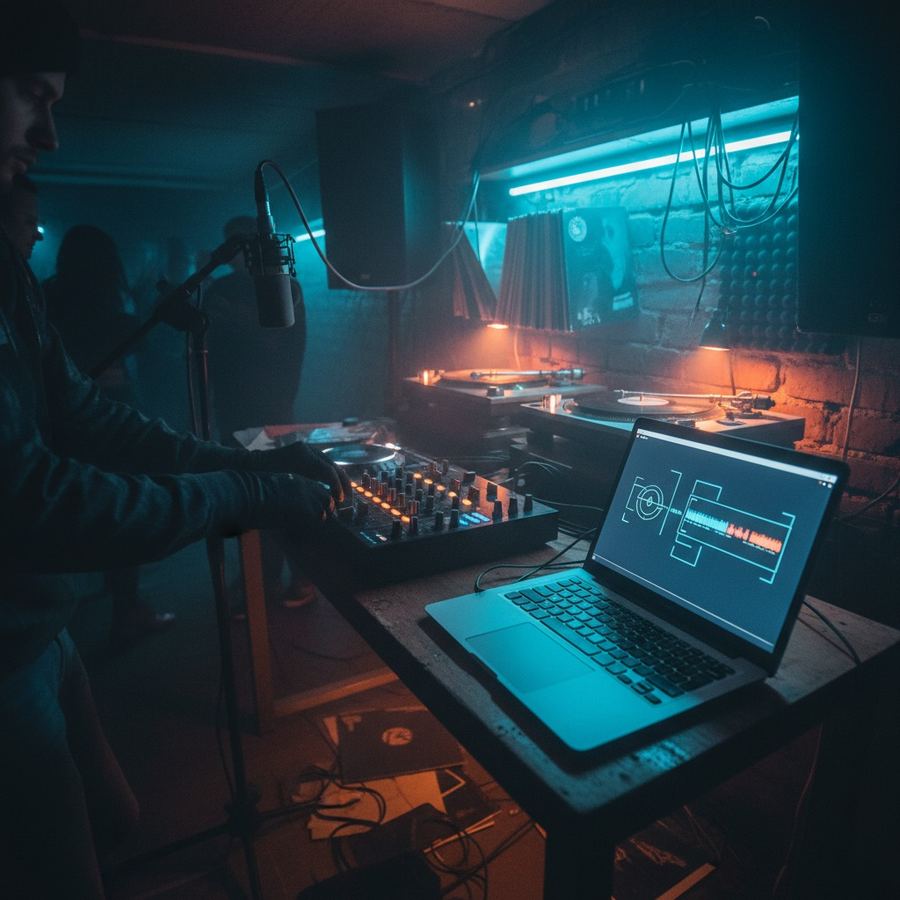
The radio culture section is where Unchained Radio writes about the medium itself. Not just the music played on radio, but the ideas behind it. Community broadcasting, the economics of independent stations, the tension between terrestrial and online models, and the ongoing argument about whether curation can survive in a platform economy.
Community Radio and Independent Broadcasting
How small stations sustain themselves and their communities. The economics, the volunteer culture, and the music that holds it together.
Online Radio vs. Terrestrial Stations
Two models for the same idea. What each does well, what each sacrifices, and why the distinction still matters.
Why Curated Internet Radio Still Matters
The case for human-programmed radio in a world that assumes algorithms do it better. Spoiler: they do not.
The Return of Niche Internet Radio
After a period of consolidation, small focused stations are reappearing. What changed, and what the new wave looks like.
A Short History of Internet Radio for Dance Music
From early Shoutcast experiments to Rinse FM going legal to Boiler Room going global. The timeline of how we got here.
The Bigger Picture
Independent radio is not a nostalgia project. Stations like NTS, Rinse FM, and Dublab continue to prove that focused, taste-driven programming finds an audience. The infrastructure has changed. The cost of broadcasting has dropped. The tools are better. But the core proposition is the same as it was when pirate stations were running from tower blocks in London: someone with good records and something to say presses a button and broadcasts to whoever is listening.
That is worth writing about, and it connects directly to everything else on this platform. The mix archive, the artist spotlights, the playlists, and the editorial features all exist because of the culture that independent radio built. This section is where we examine that culture directly.