Somewhere between your third hour of algorithmically generated "chill beats" and the moment you realized every Spotify Discover Weekly was recycling the same fifty artists, you started looking for something else. That instinct is correct. There is something else, and it has been running continuously since the late 1990s. It is called internet radio, and for electronic music listeners specifically, it remains the single best way to hear music you did not know you needed.
This guide covers what internet radio actually is, how it differs from the streaming platforms you already use, where to start listening, and what to expect when you do. No jargon, no gatekeeping. Just the information you need to tune in and stay.
What Internet Radio Actually Is
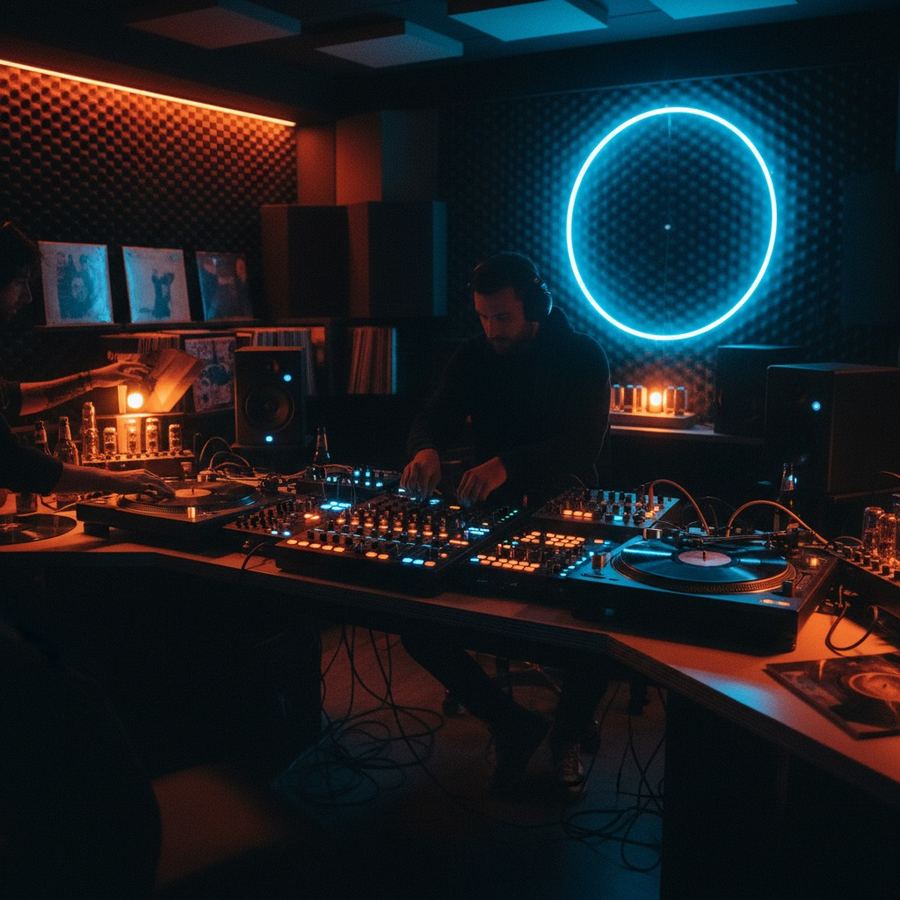
Internet radio is live or scheduled audio streamed over the internet, usually curated by a human being who has opinions about music. That last part is what separates it from nearly everything else in the current audio landscape. A radio station, whether it broadcasts over FM airwaves or streams through a web player, is built on the idea that someone with knowledge and taste is making decisions about what you hear and in what order.
Most internet radio stations focused on electronic music are genre-specific. They do not play pop hits between sets. They do not run commercial breaks every twelve minutes. They exist because someone cared enough about a particular corner of music to build a broadcast infrastructure around it. Some stations operate from physical studios with rotating hosts. Others are one-person operations running from a bedroom. Both can be excellent.
The technology is straightforward. A station encodes audio and sends it to a streaming server. You connect to that server through a web browser, a dedicated app, or a media player that accepts stream URLs. The audio plays in real time. You hear what everyone else tuned in hears at that moment. That shared experience, even among strangers across time zones, is part of what makes it different.
How It Differs from Playlists and Podcasts
Streaming playlists are built by algorithms trained on engagement metrics. They optimize for not skipping, which is a fundamentally different goal from introducing you to something unfamiliar. An algorithm that learns you like deep house will feed you more deep house that sounds like the deep house you already heard. It narrows. Internet radio, curated by a person with a record collection and a point of view, widens.
Podcasts are closer in spirit, especially DJ mix podcasts. But podcasts are on-demand and isolated. Radio is happening now. There is a schedule, a host, sometimes live chat. When a DJ on NTS plays something extraordinary at 2pm on a Tuesday and you happen to be listening, that moment belongs to the broadcast. You cannot bookmark it. You were either there or you were not.
The other difference is curation depth. A single two-hour radio show might cover 30 tracks pulled from a DJ's personal collection, including white labels, test pressings, and unreleased material that will never appear on any streaming platform. The catalog is simply larger and stranger on radio.
Where to Start Listening
Four stations serve as reliable entry points for anyone interested in electronic music radio. Each has a different character, but all share a commitment to programming that respects the listener's intelligence.
NTS Radio launched in London in 2011 and has become the benchmark for independent internet radio. Two channels run 24 hours a day with a rotating cast of hundreds of hosts. The range is enormous, covering everything from ambient to grime to jazz to experimental electronics, but the quality control is consistent. If you only try one station, start here. The schedule is published weekly and the archive is deep.
Rinse FM has roots in London's pirate radio scene dating back to 1994. It went legal in 2010 and now streams online alongside its FM signal. The programming leans toward UK dance music traditions: garage, jungle, grime, dubstep, and the bass-heavy end of house and techno. If your tastes run toward rhythm and energy over atmosphere, Rinse is the station.
Dublab has been broadcasting from Los Angeles since 1999, making it one of the longest-running internet radio stations anywhere. The programming is eclectic and tilted toward the experimental, the psychedelic, and the ambient. It is an excellent counterweight to more club-focused stations.
The Lot Radio operates from a glass-walled booth in Brooklyn and streams video alongside audio. The visual element adds something. Watching a DJ dig through records in real time connects you to the physical process behind the music. The programming covers a broad range but tends to favor deep, soulful selections.
Beyond these starting points, dozens of smaller stations cover more specific territory. Our feature on niche internet radio covers several worth exploring once you have a sense of what you like.
How to Listen
The simplest method is visiting a station's website and clicking play. NTS, Rinse, Dublab, and Lot Radio all have web players that work in any modern browser. Leave the tab open and the audio runs in the background while you work, cook, or do whatever else you do while music plays.
For mobile listening, most major stations have dedicated apps. TuneIn and Radio Garden aggregate thousands of stations into a single interface, which is useful for browsing but can feel impersonal. The direct approach, going to the station's own site or app, usually gives you access to schedules, archives, and chat features that aggregators strip out.
Many stations also publish direct stream URLs in formats like .m3u or .pls, which can be opened in VLC, foobar2000, or any media player that handles network streams. Our history of internet radio covers the technical evolution of these stream formats.
What to Expect
Here is the part that trips up newcomers: you cannot skip tracks. There is no skip button. There is no thumbs-down icon. If a DJ plays something you do not like, you either wait it out or tune to a different station. This is not a limitation. It is the entire point.
The skip button trained a generation of listeners to treat music as disposable. If a track does not hook you in fifteen seconds, discard it and move on. Radio forces a different relationship with music. You sit with a track you would never have chosen. Sometimes it does nothing for you. Sometimes it rewires your taste. The best radio hosts understand this dynamic and program their shows to challenge listeners, not just comfort them.
Expect variety within focus. A show dedicated to house music will not suddenly play metal, but it might move from a warm, melodic opener to something raw and percussive, then into a vocal track you would not have picked, then back to something deep. The journey is the content. Individual tracks are just the material.
Expect dead air occasionally. Not every station runs 24/7 programming. Some have automated playlists between live shows. Check the station's schedule and tune in when a specific show is live for the best experience.
Why It Matters for Electronic Music Specifically
Electronic music, more than almost any other broad genre, suffers on algorithmic platforms. The catalogs are fragmented across labels, many of which are too small to negotiate favorable placement on major streaming services. Vinyl-only releases, white labels, and limited pressings never make it to Spotify at all. The artists who matter most in underground dance music often have modest streaming numbers because their audience finds them through other channels.
Radio is that other channel. It always has been. From the pirate stations of 1990s London that broke jungle and garage to the current generation of internet broadcasters championing sounds that commercial platforms ignore, radio has been the discovery infrastructure for dance music. That function has not been replaced by algorithms. It has been reinforced by them, because the worse algorithmic discovery gets for niche music, the more valuable human curation becomes.
If you want to understand why human curation consistently outperforms algorithmic playlists for this kind of music, we have written about that separately. And if the terminology in this guide or on the stations you visit feels unfamiliar, our glossary of dance music terms covers the essentials without condescension.
The only real advice is to start listening. Pick a station, pick a show, and give it an hour. Not fifteen minutes. An hour. Let a DJ take you somewhere you did not plan to go. That is what radio does, and no algorithm has figured out how to replicate it. Check our live stream if you want to start right now.