Every scene has its shorthand. Dance music has more than most, and much of it gets thrown around in DJ bios, show descriptions, and record store conversations with the assumption that everyone already knows what it means. Some people do. Plenty do not. Nobody should have to pretend.
This glossary covers the terms you will encounter most frequently as a listener, whether you are reading liner notes, browsing our mix archive, or trying to figure out what a DJ means when they describe their sound as "deep, dubby, four-on-the-floor garage with acid undertones." By the end of this page, that sentence will make perfect sense.
A
Acid. A sound defined by the Roland TB-303 bass synthesizer and its squelchy, resonant filter sweeps. Acid house emerged in Chicago in the mid-1980s when DJ Pierre and Phuture ran the 303 through distortion. The term now applies to any track featuring that filtered bass sound, regardless of genre.
Ambient. Electronic music designed for atmosphere rather than dancefloors. Characterized by sustained tones, sparse rhythms, and textural depth. Brian Eno codified the genre in the late 1970s.
B
B2B (Back-to-Back). A DJ set where two or more DJs take turns playing tracks, alternating every one or two records. B2B sets test chemistry and trust between selectors. The best ones produce combinations neither DJ would have reached alone.
Balearic. A broad, open-minded approach to DJ selection named after Ibiza in the 1980s. A Balearic set might include rock, pop, funk, ambient, and house as long as the mood is right. It describes an attitude more than a sound.
BPM (Beats Per Minute). The tempo of a track measured by its kick drum or primary rhythmic pulse. Deep house sits around 118-124 BPM. Techno ranges from 125 to 145. Drum and bass occupies 160-180.
Breakbeat. Any rhythm pattern that breaks from the standard four-on-the-floor kick drum pattern. Breakbeats use syncopated, sample-based drum patterns derived from funk and soul records. The "Amen break" from a 1969 track by The Winstons is the most sampled breakbeat in history and the foundation of jungle and drum and bass.
C
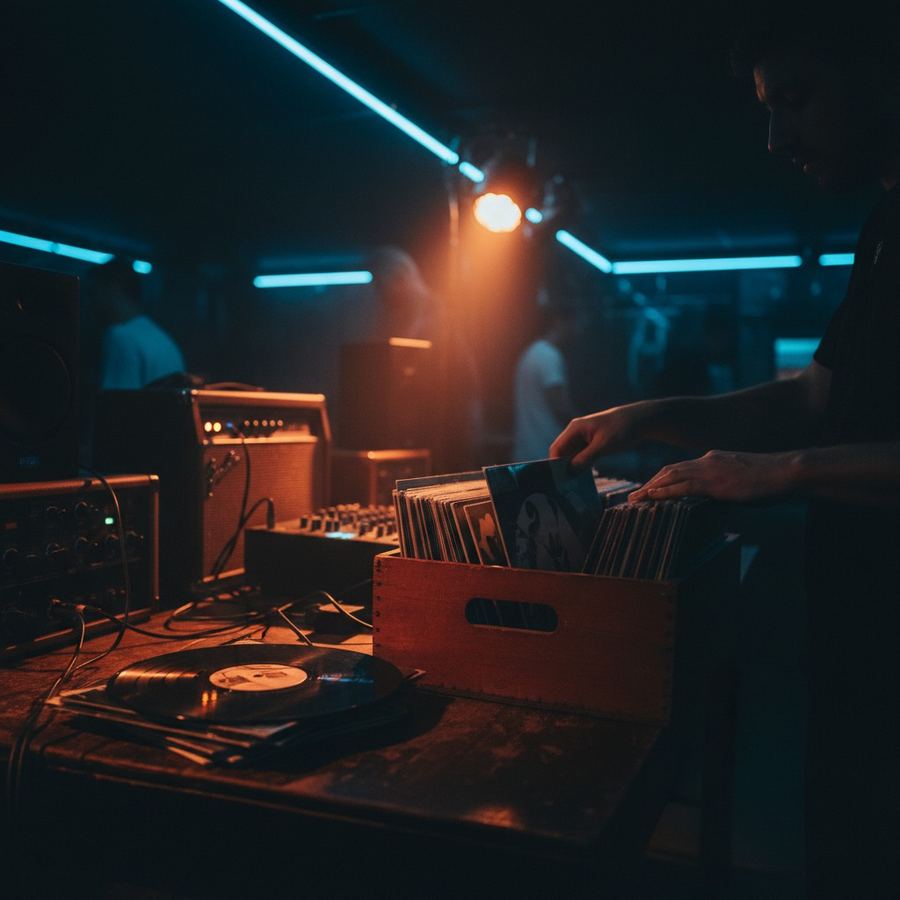
Crate Digging. Searching through bins of vinyl records in shops or collections to find tracks worth playing. The term now includes digital searching on Bandcamp and Discogs, but the original meaning is physical. Our guide to discovering new music covers modern digging strategies.
D
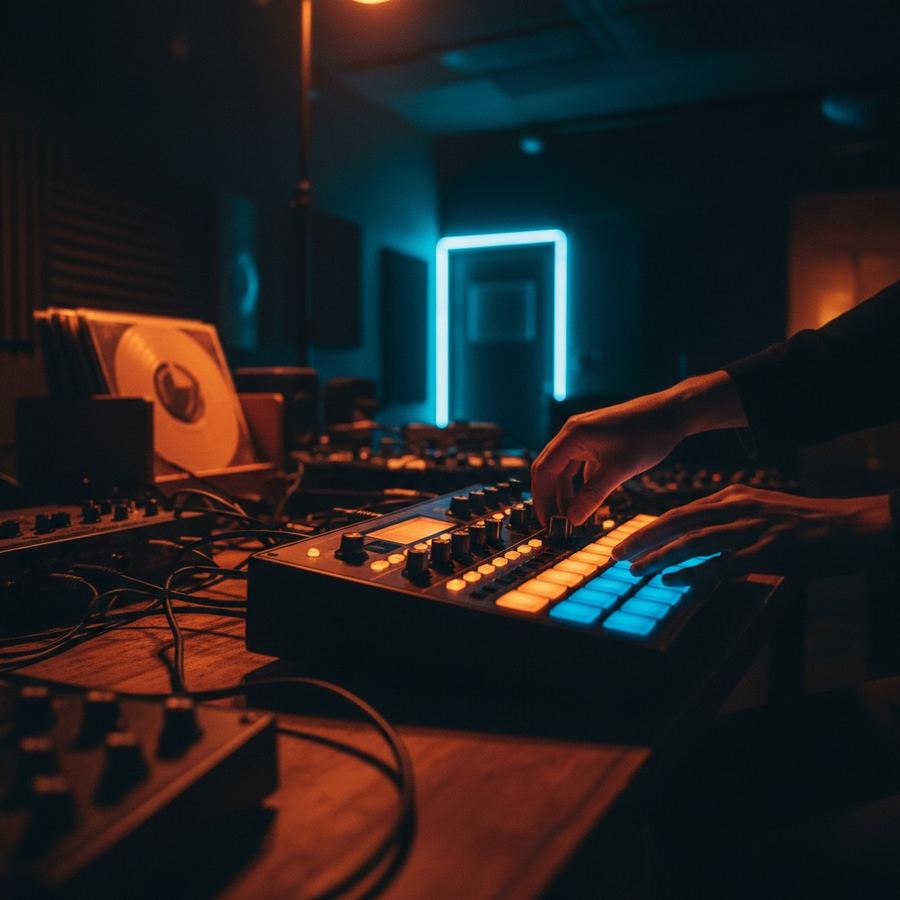
DAW (Digital Audio Workstation). Software used to produce music. Ableton Live, Logic Pro, and FL Studio are the most common in electronic music.
Deep House. A subgenre of house music characterized by warm basslines, jazzy chord progressions, and atmosphere over energy. Originated in Chicago and Detroit in the late 1980s. Larry Heard, Kerri Chandler, and Moodymann are foundational. Tempo usually sits between 118 and 124 BPM.
Dub. Two meanings. The Jamaican production technique pioneered by King Tubby and Lee "Scratch" Perry, using reverb, delay, and bass emphasis. In electronic music, "dub techno" and "dub house" apply those effects to create immersive, echo-laden atmospheres. Basic Channel defined dub techno in the 1990s.
Dubplate. A one-off acetate disc cut for a specific DJ, often containing exclusive or unreleased material. In sound system culture, having exclusive dubplates is a mark of status.
E
EBM (Electronic Body Music). A genre combining industrial music and synth-punk with aggressive, repetitive beats. Originated in Belgium and Germany in the early 1980s with Front 242 and DAF. Has influenced modern techno and seen a significant revival recently.
Edit. A reworked version of an existing track, restructured to be more functional for DJ use. Edits differ from remixes in that they typically do not add new production elements. A good edit makes a three-minute song into a seven-minute DJ tool without losing the original's spirit.
F
Filter House. A style of house music using heavy filter sweeps, gradually opening and closing a frequency filter over a looped groove. Thomas Bangalter and Daft Punk popularized the sound in the mid-1990s. "Music Sounds Better with You" by Stardust is the canonical example.
Four-on-the-Floor. A rhythmic pattern where the bass drum hits on every beat of a 4/4 bar. The foundational kick pattern of house, techno, disco, and most club music. The term distinguishes this steady pulse from syncopated patterns in breakbeat, jungle, and UK garage.
G
Garage (UK Garage). A genre that emerged in London in the mid-1990s, combining American garage house with R&B vocals, shuffled rhythms, and prominent basslines. Produced artists like MJ Cole and Artful Dodger before fracturing into 2-step, grime, and dubstep.
H
Hi-Hat. A pair of cymbals (or their drum machine equivalent) producing the high-frequency rhythmic pattern above the kick and snare. In electronic music, hi-hat programming is often what gives a track its feel. Open, closed, and the space between them define groove.
I
Italo Disco. Electronic dance music from Italy, peaking in the mid-1980s. Characterized by synthesizers, drum machines, and melodic, often campy sensibility. Alexander Robotnick, Klein & MBO, and Doctor's Cat defined the sound. Heavily sampled by contemporary house and nu-disco producers.
J
Jack / Jacking. A musical quality associated with raw Chicago house. "Jacking" describes the repetitive, hypnotic body movement the music induces. When a track "jacks," it has relentless rhythmic propulsion.
K
Kick. The bass drum hit. In electronic music, the kick is the most obsessed-over element. Its tuning, compression, length, and weight define a track's character. A techno kick sounds fundamentally different from a house kick.
L
Loop. A repeating section of audio. Loops are the structural foundation of most electronic music. A producer builds tracks by layering loops. The art is in what happens around and between them.
M
Minimal. An approach emphasizing reduction, space, and subtle variation over complexity. Robert Hood and Richie Hawtin pioneered minimal techno in the 1990s, stripping tracks to essentials: kick, hi-hat, bassline, and one or two textural elements evolving gradually.
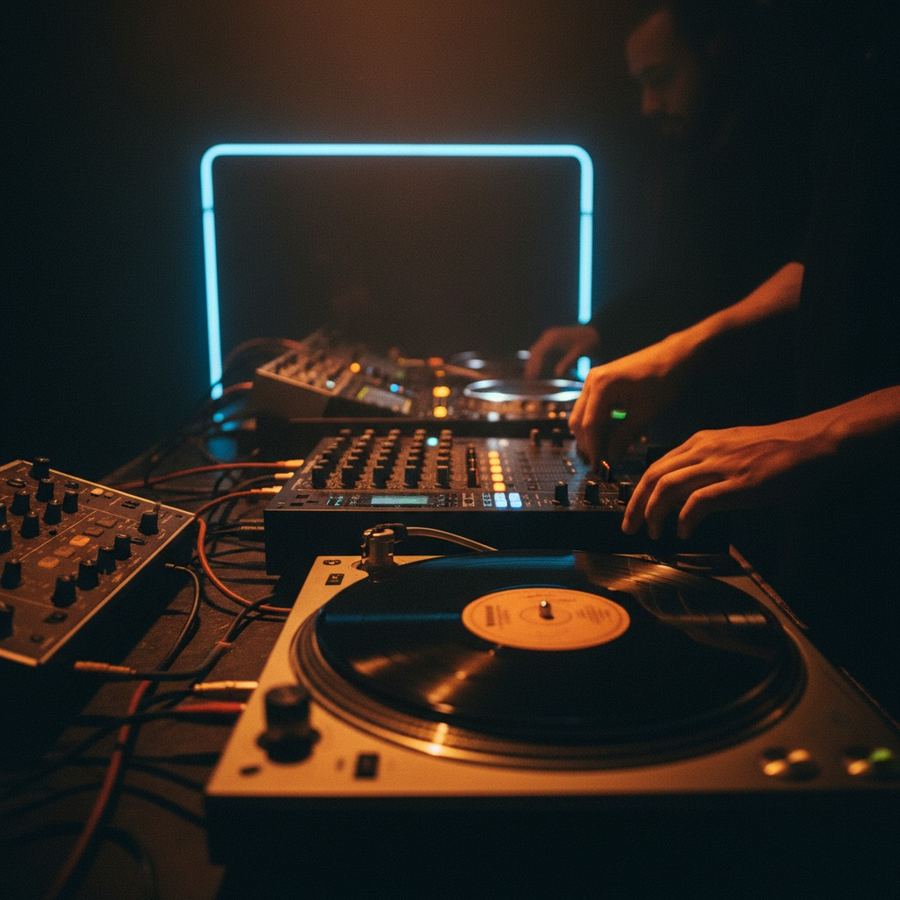
Mix. Either the act of blending two or more tracks together using turntables or CDJs, or a recorded set of tracks mixed in sequence. In the context of our guest mix culture feature, a "mix" typically means a pre-recorded DJ session of 60 to 90 minutes.
N
Nu-Disco. Modern productions drawing on disco, boogie, and Italo influences with contemporary production techniques. The line between nu-disco, cosmic disco, and modern Balearic is blurry by design.
P
Peak Time. The hours when the dancefloor is fullest and energy highest, typically midnight to 3am. As a music descriptor, it means tracks designed for maximum impact: high energy, big builds, hard grooves.
R
Record Bag. The physical bag a DJ carries vinyl in. Metaphorically, a DJ's selection for a given night. A good record bag has range and contingency plans for different floor situations.
Repress. A new pressing of a previously released vinyl record after the original sold out. Represses differ from reissues, which may involve remastering or new artwork. When a record gets repressed, demand exceeded supply.
S
Selector. Another term for DJ, emphasizing the act of choosing records over technical mixing skill. Rooted in Jamaican sound system culture. In electronic music circles, calling someone a good selector is a specific compliment about taste.
Sidechain. A production technique where one sound's volume is controlled by another's signal. Typically, bass is ducked every time the kick drum hits, creating a "pumping" effect. Ubiquitous in modern dance music.
Synth (Synthesizer). An electronic instrument generating sound through oscillators, filters, and amplifiers. Analog synths (Moog, Roland Juno, Korg MS-20) use electrical circuits. Digital synths use algorithms. The choice of synthesizer shapes tonal character as fundamentally as a guitar choice shapes rock.
T
Techno. Originated in Detroit in the mid-1980s, created by Juan Atkins, Derrick May, and Kevin Saunderson. Characterized by repetitive 4/4 rhythms, synthetic timbres, and a futurist aesthetic. Has branched into dozens of subgenres. The common thread is rhythm as the primary content.
Turntablism. The art of using turntables as instruments rather than playback devices. Turntablists scratch, beat juggle, and manipulate records to create new sounds. More associated with hip-hop, but the technique informs how many electronic DJs approach their equipment.
U
Underground. Music and culture operating outside mainstream commercial infrastructure. Implies independence from major labels and a priority on artistic integrity over marketability. The core meaning: this exists because it has to, not because someone ran a market analysis. Our underground essentials reflect this ethos.
V
Vinyl. Records pressed on polyvinyl chloride. Despite digital dominance, vinyl remains preferred by many DJs and collectors. The format's physical limitations shape how DJs select and perform. A "vinyl DJ" plays physical records rather than digital files.
W
Warm-Up Set. The opening DJ set at a club night, played before the headliner. A good warm-up builds energy without peaking too early. It requires restraint, reading an arriving crowd, and supporting someone else's set. Many experienced DJs consider it more demanding than headlining.
This glossary covers the essentials, but dance music vocabulary keeps expanding. If you encounter an unfamiliar term on our live stream or in our features, it probably deserves a place here. The language evolves because the music does.